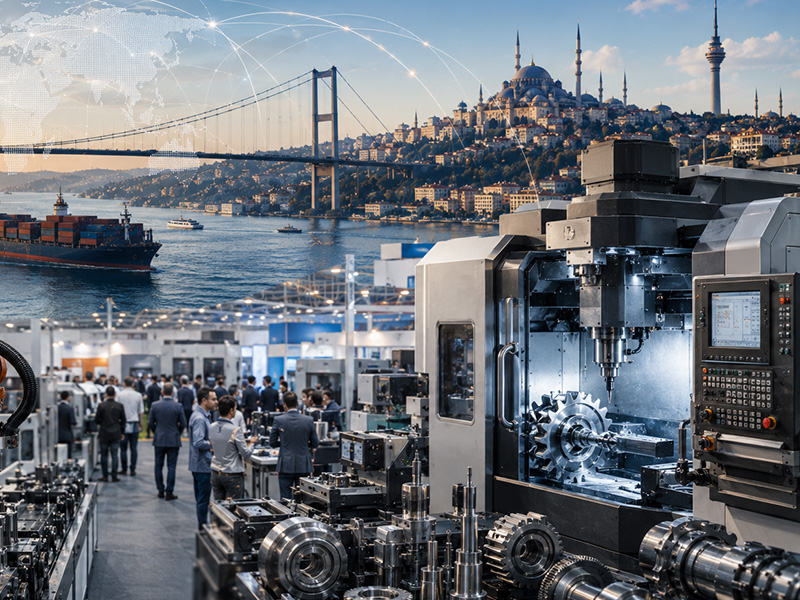
Throughout history, Istanbul has been a meeting point for empires and civilizations, and it continues to maintain its strategic importance on the changing map of the 21st-century global economy. Over the past few decades, the city has developed into a dynamic center of international trade, supported by its unique geographical position and long-established commercial heritage.
Connecting East and West, Asia and Europe, Istanbul serves not only as a geographical bridge but also as an important commercial, industrial, and technological link. Recent global disruptions, sharp cost fluctuations, and interruptions in supply routes have changed traditional approaches to international trade. Production strategies that were once heavily concentrated in the Far East are increasingly being reconsidered as flexibility, speed, reliability, and nearshoring gain importance. Within this changing environment, Istanbul stands out as more than a transit point. It plays an increasingly important role in connecting global trade and industry.
Geographical Advantage
Istanbul’s position at the crossroads of Europe and Asia provides a natural advantage for international trade. Within a flight time of approximately three to four hours, the city offers access to markets across Europe, the Middle East, North Africa, and Central Asia, representing a combined population of around 1.5 billion people.
The Bosphorus, which divides the city between two continents, is also a vital maritime route. Together with Istanbul’s ports, airports, and transportation infrastructure, this location facilitates the movement of goods and services between major regional markets.
However, Istanbul’s importance as a trade hub is not based on geography alone. Its logistics infrastructure strengthens the city’s ability to support international business operations. Rail connections extending from China toward Europe and strong air cargo capacity help reduce transportation times and improve market access. These advantages contribute to Istanbul’s role as a flexible transfer and logistics hub for companies operating across multiple regions.
The Marmara Industrial Corridor
Istanbul’s commercial strength extends far beyond finance and services. The city is surrounded by some of Türkiye’s most important industrial regions, including Kocaeli, Bursa, Tekirdağ, Sakarya, and Eskişehir.
This broader industrial corridor supports high-value manufacturing across sectors such as automotive, heavy machinery, textiles, aerospace, chemicals, and defense. Istanbul acts as a central point connecting these manufacturing capabilities with skilled labor, engineering expertise, financial resources, and international markets.
For global investors, purchasing delegations, and industrial professionals, this combination creates an environment where manufacturing capacity, commercial decision-making, and international connections are concentrated within the same region.
A Center for Industrial Diplomacy
International trade is also shaped by specialized fairs where business relationships are established, new technologies are introduced, and industry representatives come together. With internationally recognized exhibition venues and extensive organizational experience, Istanbul has become an important stage for these interactions.
Events held at venues such as TÜYAP Fair and Congress Center reinforce the city’s role in international industrial trade. Among them, MAKTEK Eurasia brings together manufacturers, technology providers, and industry professionals from different parts of the world.
Preparing to welcome the industry in 2026 under the “Türkiye is the Key” vision, MAKTEK Eurasia will bring together professionals from markets ranging from Germany and Italy to China and Korea. Such platforms allow Istanbul to function not only as an exhibition destination but also as a place where partnerships are developed and future industrial trends are discussed.
Companies interested in taking part in MAKTEK Eurasia can find participation details on the Book Your Stand page.
Digitalization and Innovation
Global trade today is increasingly shaped by digitalization, data flows, and the green transformation. Istanbul is adapting to these changes through its entrepreneurship ecosystem, technoparks, R&D centers, and investments in digital infrastructure.
The city supports a broad range of developments, from e-commerce logistics and digital supply networks to Industry 4.0 and Industry 5.0 applications. Green manufacturing practices designed around carbon-neutral objectives are also becoming more relevant within the city’s industrial and commercial ecosystem.
Another factor strengthening Istanbul’s position is the diversity of its economic base. Manufacturing, textiles, technology, finance, and numerous other sectors operate side by side, creating a broad business environment that attracts companies from different markets.
The city’s growing startup ecosystem and incubation centers also support entrepreneurship and innovation. This combination of established industry and emerging technology helps Istanbul remain connected to changing global business trends.
Cultural and Historical Appeal
Istanbul’s cultural and historical heritage adds another dimension to its position as an international business center. The city attracts both tourists and business travelers, creating a suitable environment for fairs, conferences, and international meetings.
Its combination of historic landmarks, modern infrastructure, and diverse cultural influences provides a distinctive setting for global business relationships. Istanbul’s ability to combine tradition with contemporary commercial life makes the city attractive not only as a logistics and manufacturing center but also as a destination for international events.
The Future of Istanbul in Global Trade
Istanbul’s role in international trade is expected to continue developing as investments in infrastructure and technology strengthen the city’s ability to adapt to changing global conditions.
Its geographical position, surrounding industrial capacity, logistics infrastructure, diversified economy, and international exhibition ecosystem all contribute to its strategic importance. As global companies place greater emphasis on supply-chain resilience, regional access, and flexible sourcing, Istanbul is well positioned to maintain its role as an important link between European and Asian markets.
Through continued investment, strategic planning, and international cooperation, Istanbul can remain one of the key cities connecting manufacturing, technology, logistics, and global commerce.